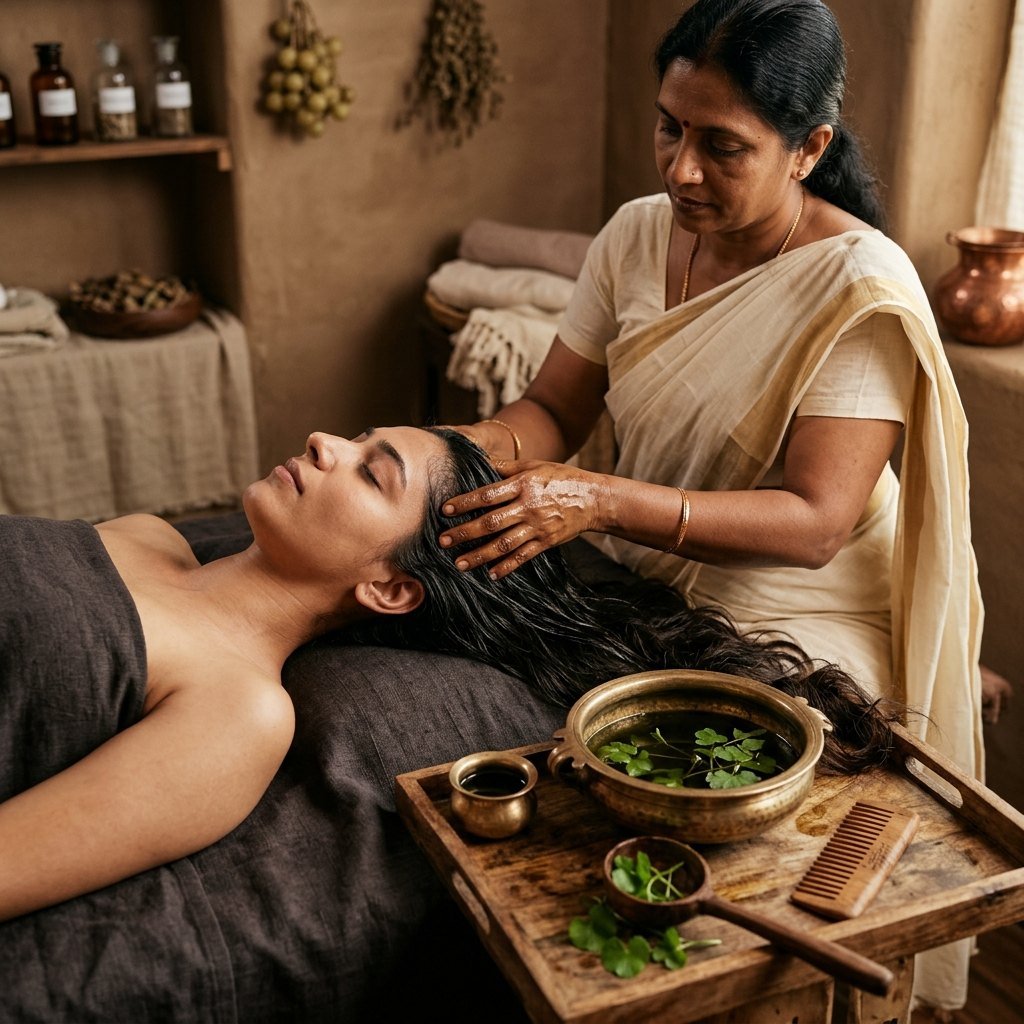
Ayurvedic Botanical Journal
✦ Classical Ayurvedic Dermatology & Wellness Journal

Ayurvedic Skin & Hair Care Journal

Curated clinical guides by Dr. Prerna Kohad (BAMS(Ayu)). Discover the root causes of skin imbalances, classical Rasayana formulations, and seasonal Dinacharya rituals.

🍃 Traditional Dadi-Nani Wisdom • Doctor's Clinic Notes

Ayurvedic Home Remedies for Skin & Hair Care

Real, natural remedies curated directly from Dr. Prerna's clinical experience with patients. Prepared with simple, authentic kitchen botanicals, classical oiling rituals (Abhyanga), and seasonal habits (Dinacharya). No synthetic chemicals, no artificial fragrances—just honest Ayurvedic medicine.

Remedy 1 of 38
All Remedies · Swipe or tap Next
🌿 Hair & Scalp ⏱️ 4 min read

Methi (Fenugreek) & Fresh Curd Hair Mask for Stubborn Dandruff and Scalp Itch

From My Clinic: "Almost every patient walking in with seasonal dandruff reaches for chemical zinc pyrithione shampoos. They strip your scalp's protective sebum, leading to rebound dryness. This simple kitchen paste restores microbial balance without stripping."

Classical Principle (Daruna Shamana): In Ayurveda, dandruff is classified as Daruna—a mixed Kapha-Vata disorder where dead skin flakes stick together due to sluggish lymphatic circulation. Fenugreek seeds (Methika) are packed with soothing plant mucilage, while fresh sour curd (Takra/Dadhi) supplies natural lactic acid to dissolve buildup.

🥣 What You Need in the Kitchen:

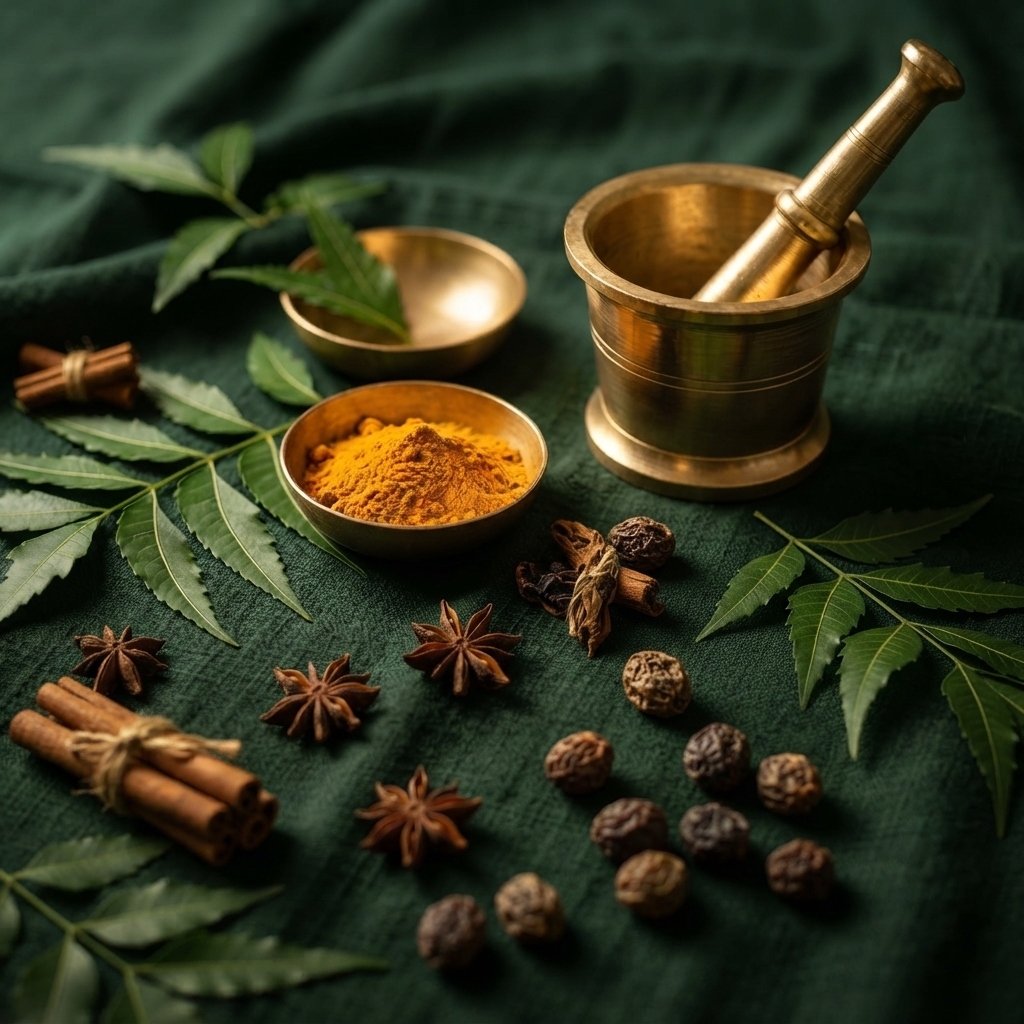
  • 2 tablespoons whole Methi seeds (soaked overnight in warm water)
  • 3 tablespoons fresh, thick homemade curd (not sour commercial yogurt)
  • 4–5 drops fresh lemon juice or a pinch of dry amla powder

📋 How to Prepare & Apply:

1. Grind the soaked methi into a silky, lump-free paste using 1-2 spoons of the soak water.

2. Whisk in the curd and lemon juice until creamy.

3. Section your hair and gently apply directly onto scalp partitions with clean fingertips.

4. Leave on for strictly 25 to 30 minutes. Never let it turn rock hard on the head.

5. Rinse with lukewarm water and a gentle herbal cleanser.

Doctor's Advice: If you catch colds easily or have active sinusitis (Kapha tendency), rinse off within 15 minutes and avoid doing this on cold, rainy evenings.
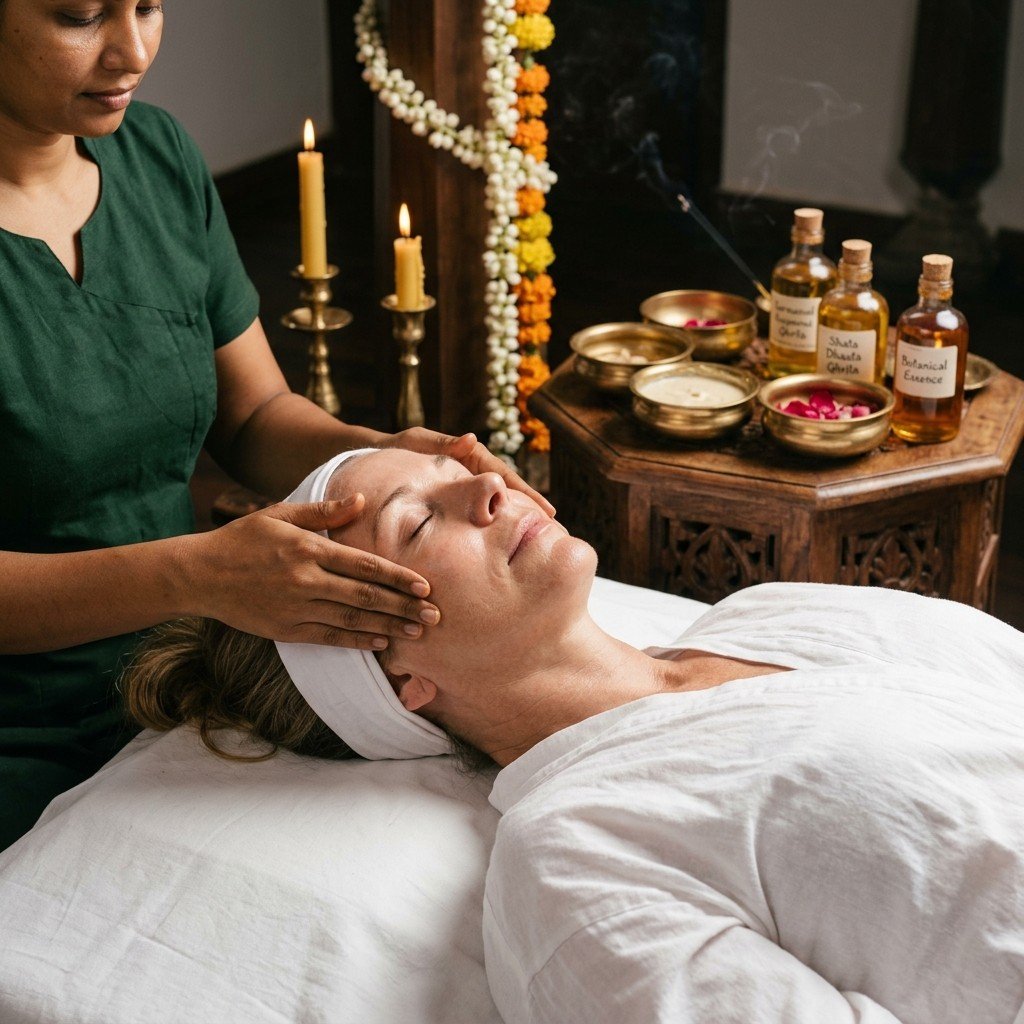
Written by: Dr. Prerna Kohad
BAMS(Ayu) • Verified
Share:
🌸 Glowing Skin ⏱️ 3 min read

Mulethi (Licorice Root) & Desi Rose Water Cold Splash for Sun Redness & Tanning

From My Clinic: "Whenever someone comes in with burning, flared cheeks after an afternoon outdoors, I advise them against rubbing ice directly on their skin. Ice causes thermal shock; what inflamed capillaries need is botanical cooling."

Classical Principle (Varnya & Sheeta Virya): Mulethi (Yashtimadhu) is placed by Maharishi Charaka in the elite Varnya Mahakashaya (10 supreme complexion-enhancing herbs). Its natural glabridin molecule disperses concentrated melanin while organic rose water instantly pacifies Bhrajaka Pitta (the dermal heat element).

🥣 What You Need in the Kitchen:

  • 1 teaspoon pure organic Mulethi powder (fine, unbleached)
  • 100 ml pure distilled desi rose water (Gulab Jal)
  • Clean glass spray bottle or bowl

📋 How to Prepare & Apply:

1. In a glass jar, steep the Mulethi powder in rose water for 3 to 4 hours (a traditional Hima Kalpana cold brew).

2. Strain through a double-layered clean muslin cloth so no grit remains.

3. Store in the refrigerator door.

4. After washing your face in the evening, spritz or gently splash over face and neck, allowing it to air-dry naturally.

Doctor's Advice: Never buy commercial rose water scented with artificial perfume or alcohol. Use pure steam-distilled hydrosol.

Written by: Dr. Prerna Kohad
BAMS(Ayu) • Verified
Share:
🌿 Hair & Scalp ⏱️ 4 min read

Stovetop Flaxseed (Alsi) Gel: Defined, Frizz-Free Waves Without Synthetic Silicones

From My Clinic: "Silicone hair serums coat the hair cuticle in liquid plastic. They look shiny on day one, but prevent moisture from penetrating on day five, causing chronic brittleness. Flaxseed gel is living botanical nourishment."

Classical Principle (Vata Shamaka & Snigdha): Flaxseeds (Atasi) are rich in Omega-3 fatty acids (ALA) and heavy unctuous lipids (Snigdha Guna) that calm dry, rough Vata energy in coarse hair shafts. It seals cuticles naturally without any residue or white flakes.

🥣 What You Need in the Kitchen:

  • 1/4 cup whole raw brown flaxseeds (Alsi)
  • 2 cups filtered water
  • A clean cotton cheesecloth or strainer

📋 How to Prepare & Apply:

1. Bring water and flaxseeds to a boil in a small stainless steel pot on medium heat.

2. Stir continuously for 7 to 8 minutes until white froth forms and liquid turns the consistency of egg whites.

3. Immediately strain while boiling hot through the cheesecloth into a glass jar (if it cools in the pan, it becomes impossible to strain!).

4. Smooth 1-2 tablespoons through dripping wet hair after a wash, scrunching upward.

Doctor's Advice: Since this has zero preservatives, keep it refrigerated and use within 8 to 10 days.

Written by: Dr. Prerna Kohad
BAMS(Ayu) • Verified
Share:
✨ Body Care ⏱️ 4 min read

Triphala Morning Face Wash: Awakening Dull, Congested Skin & Clearing Srotas

From My Clinic: "Most people only think of Triphala as a bedtime digestive powder. In classical dermatology, cooled Triphala wash is one of the most effective ways to tone sluggish, congested pores without harsh salicylic acid."

Classical Principle (Srotoshodhana & Lekhana): The trio of Haritaki, Bibhitaki, and Amalaki possesses balanced Kashaya (astringent) and Lekhana (gentle scraping) qualities. It dissolves nighttime sebum oxidization and tightens skin micro-channels (Srotas).

🥣 What You Need in the Kitchen:

  • 1/2 teaspoon pure organic Triphala Churna
  • 1 glass (250 ml) clean drinking water
  • Fine coffee filter or double muslin cloth

📋 How to Prepare & Apply:

1. Boil the Triphala in water for 5 minutes until reduced slightly. Turn off heat and allow it to cool to room temperature.

2. Crucial: Filter through four layers of muslin cloth to eliminate every tiny particle of sediment.

3. Cup the cool liquid in your palms and gently splash your closed face 4 to 5 times in the morning.

4. Leave on for 60 seconds, then rinse with clear water.

Doctor's Advice: Never skip filtering through fine cloth. Raw churna particles are microscopic abrasives and can scratch facial epidermis if used as an unfiltered scrub.

Written by: Dr. Prerna Kohad
BAMS(Ayu) • Verified
Share:
🌸 Glowing Skin ⏱️ 3 min read

Raw Milk & Besan Daily Ubtan: The Timeless Face Wash That Protects Your Acid Mantle

From My Clinic: "Patients often ask me: 'If my face wash doesn't bubble, how will my pores breathe?' Foaming agents are detergents. When you strip your skin bare, it panics and produces double the oil. A mild kitchen ubtan cleanses while leaving your natural lipid mantle intact."

Classical Principle (Mukha Lepa & Snigdha Shodana): Bengal gram flour (Chanaka Churna) gently lifts dirt through soft capillary action, while raw unboiled milk (Ksheera) delivers lactic acid, natural fat globules, and proteins that nourish Rasa Dhatu.

🥣 What You Need in the Kitchen:

  • 1 tablespoon finely sieved gram flour (Besan)
  • 2 tablespoons raw unboiled milk (or almond milk if dairy-sensitive)
  • 1 tiny pinch organic kitchen turmeric (Haridra)

📋 How to Prepare & Apply:

1. Mix into a smooth, pourable batter in the palm of your hand.

2. Wet your face with water, smooth the paste over skin, and massage in slow upward circular circles for 60 seconds.

3. Do not scrub hard. Allow it to sit while you brush your teeth, then wash off with cool water.

Doctor's Advice: If you have active red pus-filled cystic acne, replace the milk with rose water or cucumber juice to keep it strictly cooling.

Written by: Dr. Prerna Kohad
BAMS(Ayu) • Verified
Share:
🌿 Hair & Scalp ⏱️ 5 min read

Castor Oil & Fresh Curry Leaf Scalp Infusion for Receding Temples and Thinning Edges

From My Clinic: "Frontal hairline thinning is often worsened by tight hair ties and dry scalp winds. Pure castor oil is too heavy to use alone—it can pull out weak roots. But infused with curry leaves and cut with coconut oil, it stimulates dormant micro-vessels."

Classical Principle (Asthi-Majja Dhatu Poshana): Castor oil (Eranda) possesses unparalleled penetrative strength (Sukshma Guna). Curry leaves (Girinimbika) are loaded with natural antioxidants, iron, and beta-carotene that feed the hair bulbs (Kesha Moola).

🥣 What You Need in the Kitchen:

  • 2 tablespoons cold-pressed Castor oil (Eranda Taila)
  • 2 tablespoons cold-pressed Virgin Coconut oil (Narikel Taila)
  • 15–20 fresh, thoroughly washed and dried Curry Leaves (Kadi Patta)

📋 How to Prepare & Apply:

1. Combine both oils in a small iron or steel ladle on low flame.

2. Add the dry curry leaves. Let them crackle gently for 3–4 minutes until they turn dark green and aromatic. Turn off flame.

3. Let it cool until comfortably warm. Strain leaves out.

4. Dip finger pads and perform gentle friction massage on the receding hairline and temples for 5 minutes.

5. Wash off after 1 hour or keep overnight.

Doctor's Advice: Never tug or pull hair roughly while oiling. Always massage with warm finger pads, not your nails. Consistency over 8–10 weeks is key.

Written by: Dr. Prerna Kohad
BAMS(Ayu) • Verified
Share:
🌸 Glowing Skin ⏱️ 4 min read

Kansa Vatki & Almond Oil Night Ritual for Tired Eyes, Screen Fatigue & Dark Circles

From My Clinic: "Looking at blue screens until midnight overheats Alochaka Pitta—the sub-dosha governing ocular vision. It pools sluggish dark venous blood around your eyes. A 3-minute bronze massage draws out this localized heat."

Classical Principle (Alochaka Pitta Shamana): Kansa (an ancient bronze alloy of copper and tin) has electromagnetic cooling properties. Copper harmonizes bio-currents, while Sweet Almond oil (Badam Roghan) nourishes thin peri-orbital skin rich in delicate marma points.

🥣 What You Need in the Kitchen:

  • Small authentic Kansa wand or small bronze bowl (Kansa Vatki)
  • 3–4 drops pure cold-pressed Sweet Almond oil

📋 How to Practice:

1. Cleanse your face and tap almond oil lightly around orbital eye socket bones.

2. Glide the smooth dome of the Kansa bowl in gentle figure-eight motions around both eyes.

3. Pause with feather-light pressure on the temple hollows (Shankha Marma) for 5 seconds.

4. Finish with gentle outward sweeping strokes toward the hairline for lymphatic drainage.

Doctor's Advice: Never press hard on the eyeball itself. Stay on the bony orbital ridge. If the bronze leaves a slight grey residue, simply wipe with a warm damp cloth—it indicates oxidized heat release.

Written by: Dr. Prerna Kohad
BAMS(Ayu) • Verified
Share:
✨ Body Care ⏱️ 3 min read

Neem Leaf & Vetiver (Khus) Cooling Bath for Monsoon Bacne & Prickly Heat

From My Clinic: "During sweaty Indian monsoons and summer humid spells, sweat channels (Svedavaha Srotas) get blocked under tight clothes. This herbal rinse soothes back eruptions and prickly heat in just 3 days."

Classical Principle (Kushtahara & Dahaprashamana): Neem (Nimba) is the peerless bitter purifying herb (Tikta Rasa) that neutralizes bacteria, while Vetiver (Ushira) has deep cooling and aromatic grounding properties (Sheeta Guna).

🥣 What You Need in the Kitchen:

  • 25–30 fresh green Neem leaves (thoroughly washed)
  • A small bundle of clean Vetiver root (Khus)
  • 2 liters water

📋 How to Prepare & Apply:

1. Boil the neem leaves and vetiver root in 2 liters of water for 10 minutes until the water turns pale golden-green.

2. Turn off the flame, cover, and let it steep for 15 minutes.

3. Strain and pour this concentrated herbal decoction into your daily bathing water bucket.

4. Use as the final rinse over your shoulders, back, and chest after bathing. Pat dry gently with a soft cotton towel.

Doctor's Advice: Avoid rough loofahs when having prickly heat bumps. Loofahs scratch active pustules and spread fungal microbes across your back.

Written by: Dr. Prerna Kohad
BAMS(Ayu) • Verified
Share:
🌿 Hair & Scalp ⏱️ 4 min read

Warm Desi Cow Ghee Foot Massage (Pada Abhyanga) for Stress-Induced Hair Shedding

From My Clinic: "When patients report sudden handfuls of hair falling in the shower after weeks of high stress and poor sleep, applying hair serums to the scalp won't fix it. In Ayurveda, your nervous system and hair roots share the exact same tissue lineage."

Classical Principle (Majja Dhatu & Vata Shamana): Charaka Samhita explicitly notes that the nerve endings in the soles of the feet directly regulate cranial circulation and optical vitality (*Netra Prasadana*). Calming agitated Vata in the feet brings deep, restorative delta sleep, lowering cortisol and halting telogen effluvium hair shedding.

🥣 What You Need in the Kitchen:

  • 1/2 teaspoon pure Desi A2 Cow Ghee (Ghrita)
  • Clean pair of breathable cotton sleeping socks

📋 How to Practice:

1. Wash your feet with warm water and wipe completely dry before bed.

2. Warm a pea-sized amount of ghee between your palms.

3. Rub firmly across the soles, arches, and heels. Use your thumb to massage the central point of the sole (Talahridaya Marma) with circular pressure for 2 minutes per foot.

4. Slip on cotton socks to protect your bedsheets and sleep deeply.

Doctor's Advice: Do not walk on slick tiled floors after applying ghee. Put your socks on immediately before stepping into bed.

Written by: Dr. Prerna Kohad
BAMS(Ayu) • Verified
Share:
🌸 Glowing Skin ⏱️ 3 min read

Nutmeg (Jaiphal) & Raw Honey Spot Dab for Painful Under-the-Skin Hormonal Bumps

From My Clinic: "We all know that throbbing, blind bump that appears along the jawline before periods. The biggest mistake is squeezing it—that drives infection deeper and causes permanent atrophic scarring. This targeted paste dries it painlessly."

Classical Principle (Shothahara & Vranaropana): Nutmeg (Jatiphala) is a potent anti-inflammatory spice with natural myristicin that reduces swelling (Shotha). Raw unprocessed honey (Madhu) exerts gentle osmotic pull that draws out stagnant pus and accelerates clean healing without dark spots.

🥣 What You Need in the Kitchen:

  • 1 whole clean Nutmeg stone (Jaiphal)
  • 3–4 drops raw, unpasteurized honey or raw cow milk
  • A clean stone grinding board (Chakla or Chandan slab)

📋 How to Prepare & Apply:

1. Put 3 drops of honey on the clean stone slab.

2. Rub the nutmeg stone against the slab in firm circles for 30 seconds until a thick, fragrant paste forms.

3. Dab a small dot directly onto the blind bump using a clean earbud or fingertip.

4. Leave on for 45 minutes or overnight, then rinse with lukewarm water.

Doctor's Advice: This is strictly a localized spot treatment. Do not smear nutmeg all over your entire face, as it is warming and can irritate sensitive cheek skin.

Written by: Dr. Prerna Kohad
BAMS(Ayu) • Verified
Share:
🌿 Hair & Scalp ⏱️ 4 min read

Amla & Red Hibiscus (Japapushpa) Overnight Cold-Brew for Premature Greying

From My Clinic: "Young professionals in their 20s often panic when they spot their first silver hairs. In Ayurveda, premature greying (Palitya) is primarily due to excess Pitta heat burning up melanin pigments in hair bulbs. This cold brew acts as a daily coolant."

Classical Principle (Raktapitta Shamana & Keshya): Fresh Red Hibiscus (Japapushpa) flowers contain natural flavonoids and conditioning mucilage, while Indian Gooseberry (Amalaki) delivers potent, heat-stable vitamin C and tannins that protect cellular melanocytes.

🥣 What You Need in the Kitchen:

  • 2 tablespoons dried, deseeded wild Amla pieces (or Amla powder)
  • 4–5 fresh red Hibiscus petals (or 1 tablespoon dried petals)
  • 500 ml drinking water in an earthen pot or glass pitcher

📋 How to Prepare & Apply:

1. Place amla and hibiscus in water before going to bed. Cover with a breathable lid and let steep overnight.

2. In the morning, mash the softened flowers gently with your clean fingers and strain the ruby-hued water.

3. Pour into a clean spray bottle.

4. Spray directly onto scalp roots every morning and gently massage for 60 seconds. No need to wash it out.

Doctor's Advice: Pair this topical tonic with 1 fresh amla or a teaspoon of chyawanprash daily to cool internal liver and blood heat.

Written by: Dr. Prerna Kohad
BAMS(Ayu) • Verified
Share:
✨ Body Care ⏱️ 4 min read

Fresh Aloe Vera & Chilled Cucumber Pulp: Emergency Rescue for Over-Exfoliated Skin

From My Clinic: "Every single week, someone visits my clinic whose skin is peeling and burning from aggressive chemical peel serums. When skin stings even with plain tap water, put all active skincare away and use this gentle botanical salve."

Classical Principle (Ropana & Sheeta Prasadana): Fresh Aloe Vera (Kumari) is celebrated as Vranaropaka (wound-healer), stimulating fibroblast collagen repair, while chilled Cucumber (Trapusha) quenches burning capillary heat (Daha).

🥣 What You Need in the Kitchen:

  • 1 fresh leaf of organic Aloe Vera
  • 3 tablespoons freshly grated, chilled cucumber pulp

📋 How to Prepare & Apply:

1. Mandatory Safety Step: Cut the base of the aloe leaf and let it stand upright in a glass for 15 minutes to drain out the bitter yellow fluid (aloin). Discard this yellow sap—it causes severe dermatitis if left on sensitive skin.

2. Slit the leaf open and scoop out the crystal-clear inner gel.

3. Blend the clear gel with grated cucumber into a cool, soothing jelly.

4. Slather over clean face and neck. Lie down and let it soothe your burning barrier for 20 minutes.

5. Wash off with cool water and immediately lock in moisture with 2 drops of pure sweet almond oil or desi ghee.

Doctor's Advice: Never use packaged green aloe gels loaded with artificial colors, synthetic carbomers, and fragrance when your skin barrier is compromised.

Written by: Dr. Prerna Kohad
BAMS(Ayu) • Verified
Share:
🌸 Glowing Skin ⏱️ 3 min read

Raw Grated Potato (Alu) & Lemon Drop Juice for Stubborn Post-Acne Dark Marks

From My Clinic: "When brown pigmentation lingers for months after an acne breakout heals, patients often spend thousands on harsh chemical peels that thin the epidermis. The natural catecholase enzymes in fresh raw potato juice gently dissolve melanin deposits without compromising your barrier."

Classical Principle (Varnya & Rakta Prasadana): Raw potato (Aluka) combined with pure rose water exerts a cooling enzymatic clearing action on stagnant Bhrajaka Pitta. It calms dermal capillary hyper-reactivity and fades dark spots (Vyanga) gradually and naturally.

🥣 What You Need in the Kitchen:

  • 1 medium chilled raw organic Potato (washed & peeled)
  • 3–4 drops fresh Lemon juice (never more!)
  • 1 tablespoon pure distilled Rose Water

📋 How to Prepare & Apply:

1. Finely grate the chilled potato and squeeze its juice through a clean cotton handkerchief into a bowl.

2. Add 3 drops of lemon juice and rose water to buffer the acidity.

3. Dip two flat cotton pads and place them directly over dark blemishes on cheeks or chin.

4. Leave on for 15 minutes, then rinse with cold water.

Doctor's Advice: Never rub raw lemon slices directly on your face—pure lemon juice has a harsh acidic pH of 2 that burns facial capillaries. The dilution in raw potato juice makes it gentle and safe.

Written by: Dr. Prerna Kohad
BAMS(Ayu) • Verified
Share:
🌸 Glowing Skin ⏱️ 4 min read

Red Sandalwood (Raktachandana) Stone Rubbing for Hormonal Jawline Bumps

From My Clinic: "Hormonal acne clustered along the chin and mandibular jawline is notoriously stubborn because it stems from deep Pitta-Rakta heat. White sandalwood is fragrant and cooling, but classical texts specifically prescribe Red Sandalwood for clearing heated blood toxins."

Classical Principle (Rakta Shodhaka & Pittahara): Pterocarpus santalinus (Raktachandana) is bitter, astringent, and cooling (Tikta-Kashaya-Sheeta). It constricts dilated capillaries, pacifies agitated blood tissue (Rakta Dhatu), and prevents painful cysts from developing into infected whiteheads.

🥣 What You Need in the Kitchen:

  • 1 solid genuine stick/block of Red Sandalwood (Raktachandana)
  • 1 tablespoon pure distilled Rose Water (Gulab Jal)
  • Clean stone rubbing board (Chandan Pata)

📋 How to Prepare & Apply:

1. Pour 5 drops of rose water on the stone board.

2. Rub the red sandalwood block in firm circular motions until a thick, terracotta-crimson paste forms.

3. Dab the fresh paste generously over the jawline and chin.

4. Allow it to dry for 20 minutes (until it feels taut), then wash off with cool water.

Doctor's Advice: Avoid commercial packaged 'sandalwood powders'—almost 90% are adulterated sawdust mixed with chemical red dyes. Always invest in a solid wood stick that you grind fresh.

Written by: Dr. Prerna Kohad
BAMS(Ayu) • Verified
Share:
🌸 Glowing Skin ⏱️ 4 min read

Overnight Soaked Almond (Badam) & Kesar Milk Paste for Dry, Dull Winter Skin

From My Clinic: "When winter winds arrive, skin turns parchment-dry and ashen grey. Patients layer on petroleum cold creams that congest their pores. What dry, mature Vata skin truly craves is bio-available unctuous nutrition (Snehana)."

Classical Principle (Ojas Vardhana & Vata Shamaka): Sweet almonds (Vatada) contain natural bio-vitamin E and plant ceramides that mirror human skin lipids. Infused with pure saffron (Kumkuma), it nourishes the micro-capillaries of Rasa Dhatu, restoring biological luster (Ojas).

🥣 What You Need in the Kitchen:

  • 4–5 whole raw Almonds (soaked overnight in clean water)
  • 2 tablespoons raw unboiled Cow Milk (or almond milk)
  • 3–4 strands authentic Kashmiri Kesar (Saffron)

📋 How to Prepare & Apply:

1. Peel the brown skins off the soaked almonds completely.

2. In a small stone mortar, crush the peeled almonds with milk and saffron strands into a silky, lump-free paste.

3. Smooth over face and neck. Leave for 20 minutes.

4. Massage gently in upward circular motions as you rinse with lukewarm water.

Doctor's Advice: Peeling the almonds is mandatory—the outer skins contain enzyme inhibitors that can feel slightly abrasive on delicate facial tissue.

Written by: Dr. Prerna Kohad
BAMS(Ayu) • Verified
Share:
🌸 Glowing Skin ⏱️ 3 min read

Dhaniya (Coriander Seed) Overnight Cold Infusion: Internal Coolant for Facial Flushing

From My Clinic: "You cannot fix hot facial redness, rosacea flushes, or burning skin by topical creams alone if your internal digestive fire is running too hot. This simple coriander seed water is the most reliable cooling internal tea I prescribe for heat flare-ups."

Classical Principle (Dhanyaka Hima & Pitta Shamaka): Described in Bhavaprakasha, Dhanyaka Hima (cold brew of coriander) is sweet and astringent (Madhura-Kashaya). It cools aggravated gastric bile (Pachaka Pitta), flushes metabolic toxins through the kidneys, and extinguishes burning sensations (Daha).

🥣 What You Need in the Kitchen:

  • 1 tablespoon whole organic Coriander seeds (Dhaniya)
  • 1 glass (250 ml) clean room-temperature drinking water
  • Clean earthen cup or glass jar

📋 How to Prepare & Drink:

1. Lightly crush the coriander seeds with a spoon or pestle just enough to crack open the husks.

2. Put them in water, cover with a lid, and let it steep overnight (about 8 hours).

3. In the morning, strain the seeds out.

4. Sip this pale golden water on an empty stomach 30 minutes before your breakfast.

Doctor's Advice: Do not boil the seeds! Classical Hima (cold extraction) preserves the delicate cooling volatile oils that heat destroys. Drink daily for 3 consecutive weeks during summer.

Written by: Dr. Prerna Kohad
BAMS(Ayu) • Verified
Share:
🌸 Glowing Skin ⏱️ 3 min read

Crushed Desi Rose Petals & Raw Honey Paste for Dark, Peeling Chapped Lips

From My Clinic: "Habitual lip-licking and petroleum balms trap dead skin cells and worsen dark pigmentation around the borders of the lips. Fresh rose petals combined with raw honey restore natural capillary blood flow and provide gentle enzymatic smoothing."

Classical Principle (Rakta Prasadana & Madhura Rasa): Lip tissue contains no sebaceous oil glands, making it the very first area to dry out when Vata increases. Indian rose (Shatapatri) cools burning and softens cracked ridges, while raw honey (Madhu) draws ambient moisture into deeper mucosal tissue.

🥣 What You Need in the Kitchen:

  • 6–8 fresh clean fragrant desi Rose petals (pesticide-free)
  • 1/2 teaspoon raw forest Honey
  • 2 drops virgin Coconut oil or Desi Ghee

📋 How to Prepare & Apply:

1. Pound the rose petals into a fine pulpy paste using a small mortar.

2. Whisk in the honey and coconut oil.

3. Gently massage this fragrant petal paste over your lips for 60 seconds using your fingertip.

4. Leave on for 15 minutes, then wipe clean with a warm, moist towel.

Doctor's Advice: Avoid hybrid florist roses which are sprayed with industrial chemical preservatives. Always pick fresh, fragrant garden-grown Indian desi rose petals.

Written by: Dr. Prerna Kohad
BAMS(Ayu) • Verified
Share:
🌸 Glowing Skin ⏱️ 3 min read

Finely Milled Masoor Dal (Red Lentil) & Milk Scrub for Blackheads & Rough Nose Texture

From My Clinic: "Harsh walnut shell scrubs cause microscopic tears on facial capillaries. Finely sieved red lentil flour has microscopic rounded edges that lift stubborn oxidized sebum plugs from your nose without scratching."

Classical Principle (Lekhana & Kledahara): Masoor Dal (Masura) is celebrated in classical texts for its Lekhana (gentle scraping) and Kledahara (oil-absorbing) nature. It pulls out hardened keratin debris from dilated pores on the nose and chin without disturbing skin elasticity.

🥣 What You Need in the Kitchen:

  • 2 tablespoons raw red lentils (Masoor Dal)
  • 2 tablespoons raw unboiled Milk (or Rose Water if oily)
  • 1 tiny pinch organic Turmeric (Haridra)

📋 How to Prepare & Apply:

1. Grind the whole masoor dal and pass it through a fine kitchen flour sieve (the texture must feel like soft semolina, never sharp).

2. Mix 1 teaspoon with milk and turmeric into a paste.

3. Apply on nose and chin. Let sit for 3 minutes until semi-dry.

4. Wet your fingers and rub in very gentle circular strokes. Rinse clean with lukewarm water.

Doctor's Advice: Never scrub roughly over active red inflamed pimples. This scrub is strictly for non-inflamed blackheads and congested nose texture.

Written by: Dr. Prerna Kohad
BAMS(Ayu) • Verified
Share:
🌸 Glowing Skin ⏱️ 3 min read

Cow Milk Malai (Clotted Cream) & Kasthuri Manjal for Flaky Nasolabial Creases

From My Clinic: "A frequent complaint in winter is itchy, red, peeling skin right in the creases around the nostrils and mouth corners. Applying topical steroid creams can cause perioral dermatitis; pure fresh clotted milk fat instantly rebuilds the lipid seal."

Classical Principle (Snehana & Twachya): Fresh clotted cream (Sar) scooped from boiled cow's milk contains bio-active ceramides and vitamins A & D. Wild aromatic turmeric (Kasthuri Manjal) provides antibacterial and anti-itch properties without staining your skin yellow.

🥣 What You Need in the Kitchen:

  • 1 teaspoon fresh thick cream (Malai) from whole cow milk
  • 1 tiny pinch genuine Kasthuri Manjal (Wild Turmeric)

📋 How to Prepare & Apply:

1. Whisk the malai and wild turmeric between your clean fingertips into a soft golden butter.

2. Gently massage directly into the peeling creases around the nostrils and mouth.

3. Leave on for 20 minutes.

4. Wipe away gently with a warm, damp cotton cloth.

Doctor's Advice: Use authentic wild Kasthuri Manjal, not regular kitchen curry turmeric which has staining yellow pigments and can sting raw peeling skin.

Written by: Dr. Prerna Kohad
BAMS(Ayu) • Verified
Share:
🌸 Glowing Skin ⏱️ 3 min read

Fresh Mint (Pudina) & Tulsi Leaf Astringent Toner for Overactive T-Zone Summer Sebum

From My Clinic: "Alcohol-based store toners strip your face so aggressively that your oil glands produce double the oil within two hours. A fresh herbal infusion of holy basil and garden mint naturally tightens pore openings through cooling botanical tannins."

Classical Principle (Kashaya-Tikta Rasa & Kaphahara): Holy Basil (Tulsi) has proven antibacterial properties that control acne microbes, while Mint (Pudina) contains natural menthol that cools surface micro-circulation and reins in excessive sebum secretion (Seeta Virya).

🥣 What You Need in the Kitchen:

  • 10–12 fresh green Tulsi leaves (washed)
  • 8–10 fresh Mint leaves (Pudina)
  • 1 cup clean drinking water

📋 How to Prepare & Apply:

1. Bring the water to a boil, drop in the crushed leaves, and turn off the flame immediately.

2. Cover tightly and let steep for 20 minutes until completely cool.

3. Strain the clear pale green tea into a clean glass bottle and store in the fridge door.

4. After washing your face, dab over your oily T-zone using a cotton pad.

Doctor's Advice: Since this has no artificial chemical preservatives, keep it refrigerated and prepare a fresh batch every 5 to 6 days.

Written by: Dr. Prerna Kohad
BAMS(Ayu) • Verified
Share:
🌸 Glowing Skin ⏱️ 4 min read

Pure Desi Ghee & Camphor (Karpura) Healing Salve for Painful Cracked Winter Heels

From My Clinic: "Deep, painful cracks on the heels (Padadari in Ayurveda) occur when aggravated Vata dries out plantar skin. Petroleum salves just sit on top of dead skin without healing; pure cow ghee combined with edible camphor penetrates deep into fissures and accelerates tissue closure."

Classical Principle (Vranaropana & Vedanasthapana): Ghee (Ghrita) is the supreme healing medium for pathological dryness (Rukshata). Natural edible camphor (Bhimseni Karpura) acts as an analgesic that relieves the stinging pain of open cracks and stimulates healthy tissue granulation.

🥣 What You Need in the Kitchen:

  • 2 tablespoons pure Desi A2 Cow Ghee
  • 1 small pinch finely crushed edible Bhimseni Camphor
  • Clean pair of cotton sleeping socks

📋 How to Prepare & Apply:

1. Gently warm the ghee in a small bowl until just melted.

2. Stir in the powdered Bhimseni camphor until completely dissolved, then let it cool into a soft ointment.

3. Wash your feet in warm water, pat completely dry, and massage the salve generously into heel cracks.

4. Slip on cotton socks and keep on overnight.

Doctor's Advice: Use strictly edible natural Bhimseni Karpura, never synthetic pooja camphor tablets made with petroleum derivatives. Painful cracks usually close within 4 to 5 nights.

Written by: Dr. Prerna Kohad
BAMS(Ayu) • Verified
Share:
🌿 Hair & Scalp ⏱️ 4 min read

Fresh Onion Juice (Palandu) & Virgin Coconut Oil for Sudden Hair Thinning & Patchy Shedding

From My Clinic: "Patients dealing with acute hair thinning or localized shedding often ask me about onion juice. It works exceptionally well because organic dietary sulfur stimulates protein collagen synthesis in dormant roots—but raw, unbuffered onion juice causes chemical dermatitis if applied incorrectly."

Classical Ayurvedic Principle (Palandu Keshya): In classical pharmacology, red onion (Palandu) is classified as Tikshna (sharp, penetrating) and Kaphahara. It clears stubborn fungal biofilms and revives sluggish micro-vessels feeding the hair papilla. Blending it with cold-pressed coconut oil buffers its sharpness and prevents scalp irritation.

🥣 What You Need in the Kitchen:

  • 1 medium organic red onion (chopped & grated)
  • 1 tablespoon pure cold-pressed Virgin Coconut oil (Narikel Taila)
  • 2 drops Rosemary or Lavender essential oil (to neutralize pungent aroma)

📋 How to Prepare & Apply:

1. Grate the red onion and squeeze through a clean muslin cloth to extract 2 tablespoons of clear juice.

2. Whisk in the coconut oil and essential oil until completely emulsified.

3. Dip a cotton ball and dab precisely onto scalp areas showing widening partings or thinning crowns.

4. Leave on for strictly 20 minutes (never exceed 30 minutes).

5. Wash off thoroughly with lukewarm water and a mild, sulfate-free herbal cleanser.

Doctor's Advice: Always do a 5-minute patch test behind your ear. If your scalp has open abrasions or active pustules, skip onion juice until the scalp skin has fully healed.

Written by: Dr. Prerna Kohad
BAMS(Ayu) • Verified
Share:
🌿 Hair & Scalp ⏱️ 4 min read

Fresh Red Hibiscus (Gudhal) Leaves & Petals Pack for Coarse Ends & Frizzy Split Ends

From My Clinic: "Commercial hair conditioners use dimethicones that weigh hair down while starving the inner cortex. Hibiscus leaves contain living plant mucilage and natural amino acids that close flared hair cuticles naturally, giving glass-like shine without synthetic chemicals."

Classical Ayurvedic Principle (Japapushpa Rasayana): Both the flowers and fresh green leaves of Hibiscus (Japa) are hailed in Bhavaprakasha as supreme Keshya (hair tonics). Their natural saponins cleanse mild grime while their slippery mucilage restores moisture to brittle, split hair ends.

🥣 What You Need in the Garden/Kitchen:

  • 8–10 fresh green Hibiscus leaves (washed thoroughly)
  • 3–4 fresh red Hibiscus flowers (stems and pollen stamens removed)
  • 2 tablespoons clean water or fresh curd

📋 How to Prepare & Apply:

1. Grind the clean leaves and flower petals in a blender with 2 spoons of water until it forms a slippery, gel-like green paste.

2. Coat your hair strands from mid-length down to the dry split ends, then smooth the remaining paste over the scalp.

3. Tie your hair in a loose bun and leave for 30 minutes.

4. Rinse out with plain water—the leaves naturally lather and leave hair feeling deeply conditioned.

Doctor's Advice: Do not let this mask dry completely into a crust, or the leaves will stick to hair strands. Rinse while the paste is still pliable and moist.

Written by: Dr. Prerna Kohad
BAMS(Ayu) • Verified
Share:
🌿 Hair & Scalp ⏱️ 5 min read

Kalonji (Black Cumin Seed) & Warm Sesame Oil Scalp Massage for Dormant Follicles

From My Clinic: "When hair growth plateaus and hair roots become sluggish (often after viral fevers, chronic illness, or crash diets), kalonji oil provides rich thymoquinone to restart hair follicle cell mitosis."

Classical Ayurvedic Principle (Upakunchika Chikitsa): Black Cumin seeds (Upakunchika or Kalonji) are rich in nigellone, linoleic acid, and bio-active antioxidants. Simmered in cold-pressed unrefined sesame oil (Tila Taila—the gold standard base in Charaka Samhita), it deeply penetrates all five dermal layers of the scalp.

🥣 What You Need in the Kitchen:

  • 1 tablespoon whole Kalonji seeds (black cumin)
  • 3 tablespoons pure cold-pressed Sesame oil (Tila Taila)
  • Small stainless steel or iron tadka pan

📋 How to Prepare & Apply:

1. Coarsely crush the kalonji seeds in a mortar.

2. Warm the sesame oil on low flame, add the seeds, and let them infuse for 3 to 4 minutes without burning.

3. Let it cool until warm to the touch. Strain through a fine tea sieve.

4. Part your hair and use your warm finger pads to perform slow, circular friction massage for 7 minutes.

5. Wrap your head in a warm damp towel for 10 minutes, then wash after 1 to 2 hours.

Doctor's Advice: Consistency is essential for follicular stimulation. Perform this warm oil ritual twice a week for at least 6 to 8 weeks.

Written by: Dr. Prerna Kohad
BAMS(Ayu) • Verified
Share:
🌿 Hair & Scalp ⏱️ 3 min read

Fermented Rice Water (Tandulodaka) Rinse for Hard Water Hair Damage & Breakage

From My Clinic: "Patients living in metropolitan apartments frequently suffer from hard water damage—calcium and chlorine coat hair strands, making them snap easily. Fermented rice water restores an acidic pH (4.5), dissolving mineral deposits and infusing strengthening inositol."

Classical Ayurvedic Principle (Tandulodaka Vidhi): In classical texts, fermented rice water (Tandulodaka) is noted for its cooling, soothing (Sheeta and Stambhana) properties. The natural fermentation process produces pitera, peptides, and lactic acid that repair internal cortex bonds in heat-damaged hair.

🥣 What You Need in the Kitchen:

  • 1/2 cup raw unpolished rice (basmati, red rice, or white rice)
  • 2 cups filtered drinking water
  • Clean glass pitcher or jar

📋 How to Prepare & Apply:

1. Rinse the raw rice once to remove surface dust. Discard that first water.

2. Add 2 cups of fresh filtered water and swirl with your fingers until cloudy. Let it stand at room temperature for 18 to 24 hours until slightly tart.

3. Strain the milky water and dilute 1:1 with fresh warm water in a mug.

4. After shampooing your hair, pour this rinse slowly over hair and scalp. Massage for 3 minutes, then rinse with plain water.

Doctor's Advice: Never use concentrated undiluted fermented rice water without diluting—excess protein can make low-porosity hair stiff. Always dilute 50/50 with plain water.

Written by: Dr. Prerna Kohad
BAMS(Ayu) • Verified
Share:
🌿 Hair & Scalp ⏱️ 3 min read

Triphala & Bhimseni Camphor Scalp Wash for Seborrheic Itch, Scalp Acne & Grime

From My Clinic: "During sweaty gym workouts or humid weather, sebum ferments with Malassezia yeast on the scalp, causing painful pimples and unremitting itch. This cooling astringent rinse purifies the scalp biome in just two uses."

Classical Ayurvedic Principle (Kandughna & Krumighna): The astringent tannins in Triphala dry out damp scalp micro-oozing (Kleda), while edible camphor (Karpura) provides immediate antipruritic relief (Kandughna), numbing itching nerve endings and cooling cranial heat.

🥣 What You Need in the Kitchen:

  • 1 tablespoon organic Triphala Churna
  • 1 small pinch powdered pure Bhimseni Camphor
  • 500 ml water

📋 How to Prepare & Apply:

1. Boil Triphala in 500 ml water for 10 minutes until reduced by one-third.

2. Turn off the flame, drop in the pinch of edible camphor, and let it cool completely.

3. Filter thoroughly through a double-layered cotton cloth to remove all fine herb sediment.

4. Pour slowly over a damp, washed scalp, gently working it through hair roots. Do not rinse out; let it air-dry.

Doctor's Advice: Filtering through cloth is mandatory so no gritty particles remain. Use strictly natural Bhimseni camphor, never toxic synthetic chemical tablets.

Written by: Dr. Prerna Kohad
BAMS(Ayu) • Verified
Share:
🌿 Hair & Scalp ⏱️ 4 min read

Warm Mustard Oil (Sarson) & Methi Seed Scalp Massage for Stagnant Winter Shedding

From My Clinic: "In northern and central Indian winters, cold air constricts cranial blood capillaries, cutting off oxygen to hair roots and causing massive winter shedding. Mustard oil has intense warming potency that opens micro-vessels immediately."

Classical Ayurvedic Principle (Sarshapa Taila & Ushna Virya): Black mustard oil (Sarshapa) is pungent and hot (Katu-Ushna), making it the premier remedy to liquefy dense winter Kapha and relieve sluggish circulation in the scalp vertex.

🥣 What You Need in the Kitchen:

  • 3 tablespoons raw cold-pressed Kachi Ghani Mustard oil
  • 1 teaspoon Methi (fenugreek) seeds
  • Small iron ladle or saucepan

📋 How to Prepare & Apply:

1. Heat the mustard oil in a ladle on medium heat until slightly warm.

2. Add the methi seeds and let them turn dark brown (do not let them turn black!). Turn off the flame.

3. Let it cool until comfortably warm. Dip your fingertips and massage the scalp with circular kneading strokes for 5 to 7 minutes.

4. Leave on for 45 minutes before washing with a warm herbal shampoo.

Doctor's Advice: Contraindicated if you have burning scalp, high Pitta fever, or active red acne. This is strictly a cold-weather and Vata-Kapha remedy.

Written by: Dr. Prerna Kohad
BAMS(Ayu) • Verified
Share:
🌿 Hair & Scalp ⏱️ 3 min read

Rosemary & Fresh Curry Leaf Scalp Tonic Spray for Postpartum & Stress Hair Loss

From My Clinic: "New mothers often experience frightening clumps of hair fall 3 to 4 months after childbirth due to sudden estrogen drops. Heavy oily masks can cause weak postpartum roots to shed faster. A water-based botanical tonic is weightless and provides continuous folicular nourishment."

Classical Ayurvedic Principle (Asthi Dhatu Poshana): Rosemary and fresh Curry leaves (Girinimbika) are abundant in carnosic acid, plant iron, and polyphenols that prolong the anagen (growth) phase of hair without leaving any greasy buildup on the scalp.

🥣 What You Need in the Kitchen:

  • 2 fresh sprigs of Rosemary (or 1 tbsp dried rosemary leaves)
  • 15–20 fresh Curry leaves (Kadi Patta)
  • 2 cups filtered water
  • Clean spray bottle

📋 How to Prepare & Apply:

1. Bring the water, rosemary, and curry leaves to a rolling boil in a covered pot for 12 minutes.

2. Let the aromatic amber liquid cool completely to room temperature.

3. Strain and pour into a spray bottle; store in the refrigerator.

4. Part your hair and spray directly onto scalp roots every morning or night. Massage for 60 seconds. No rinsing needed.

Doctor's Advice: Make fresh batches every 7 to 8 days since this contains zero synthetic preservatives. Spray consistently for 60 days to see baby hair regrowth.

Written by: Dr. Prerna Kohad
BAMS(Ayu) • Verified
Share:
🌿 Hair & Scalp ⏱️ 4 min read

Fresh Bhringraj Leaf & Aloe Vera Root Slurry for Thinning at the Central Parting Line

From My Clinic: "Widening of the central parting line (Seemanta in Ayurveda) indicates androgenic sensitivity and localized scalp overheating. Fresh Bhringraj juice contains wedelolactone, which acts as a natural botanical 5-alpha-reductase balancer."

Classical Ayurvedic Principle (Keshya Raja & Seemanta Poshana): Known as the 'Ruler of the Hair' in Charaka Samhita, fresh Bhringraj (Eclipta alba) cools inflammatory heat at the cranial crown while fresh Aloe Vera (Kumari) delivers proteolytic enzymes that unblock clogged hair canals.

🥣 What You Need in the Kitchen:

  • 1 handful fresh Bhringraj leaves (or 1 tbsp pure organic Bhringraj churna)
  • 2 tablespoons fresh scooped Aloe Vera inner gel (aloin drained)
  • 1 teaspoon virgin Coconut oil

📋 How to Prepare & Apply:

1. Grind the fresh bhringraj leaves with aloe vera gel and coconut oil into a smooth, dark green paste.

2. Part your hair straight down the middle.

3. Apply the paste directly along the parting line and front hairline using a brush or fingertips.

4. Leave on for 30 minutes, then wash out with lukewarm water.

Doctor's Advice: Bhringraj leaves release a natural dark pigment that can temporarily darken bleached or blonde hair, but creates a rich, dark natural luster on Indian hair.

Written by: Dr. Prerna Kohad
BAMS(Ayu) • Verified
Share:
🌿 Hair & Scalp ⏱️ 4 min read

Ripe Banana (Kadali) & Castor Oil Deep Conditioning Mask for Heat-Damaged Hair

From My Clinic: "Frequent heat-styling tools and chemical rebonding treatments strip all internal lipids from the hair shaft, leaving it stiff like straw. Ripe bananas are loaded with natural potassium, bio-silica, and unctuous oils that restore elasticity."

Classical Ayurvedic Principle (Kadali Phala & Snigdha Guna): Banana (Kadali) combined with raw honey (Madhu) acts as a powerful humectant and deep tissue softener (Mridukara), coating damaged keratin bonds with protective moisture.

🥣 What You Need in the Kitchen:

  • 1 ripe or over-ripe soft Banana (spotted)
  • 1 tablespoon cold-pressed Castor oil (Eranda Taila)
  • 1 tablespoon raw unprocessed Honey
  • 2 tablespoons raw milk or curd

📋 How to Prepare & Apply:

1. Crucial Kitchen Secret: Blend the banana, castor oil, honey, and milk in a high-speed blender until completely smooth. Pass through a soup sieve so zero banana lumps remain (lumps are notoriously difficult to rinse out!).

2. Coat dry hair sections from root to tip, wearing a shower cap to trap body heat.

3. Leave on for 30 minutes.

4. Rinse thoroughly with lukewarm water and a gentle herbal cleanser.

Doctor's Advice: Never skip straining the pureed banana through a sieve. When properly strained, it washes out in seconds leaving hair unbelievably soft and silky.

Written by: Dr. Prerna Kohad
BAMS(Ayu) • Verified
Share:
✨ Body Care ⏱️ 3 min read

Chickpea Flour (Besan) & Haldi Ubtan: Traditional Full-Body Exfoliation & Tan Reversal

From My Clinic: "Patients frequently ask for body washes with AHA or chemical peels. I remind them that classical Besan Ubtan contains natural plant saponins that gently lift dead stratum corneum cells and sweat salts without destroying the skin's lipid envelope."

In classical Ayurvedic dermatology, whole-body exfoliation (Udvartana) stimulates peripheral blood circulation, mobilizes stagnant lymphatic fluid, and removes dull surface keratosis. When fine chickpea flour is combined with Kasturi Manjal and raw dairy, it forms an enzymatic emulsion that naturally brightens pigmented patches, removes stubborn outdoor tan, and leaves limbs silky smooth.

🥣 What You Need in the Kitchen:

  • 3 tablespoons finely milled besan (gram flour)
  • 1/2 teaspoon wild turmeric (Kasturi Manjal) or kitchen haldi
  • 2 tablespoons chilled raw cow milk or unflavored curd
  • 1 teaspoon pure desi rose water

📋 How to Prepare & Apply:

1. Whisk besan, turmeric, and raw milk into a rich, spreadable paste without lumps.

2. Lightly dampen your body in the bath, then smooth the ubtan evenly across your arms, legs, and back.

3. Allow it to sit undisturbed for 5 to 7 minutes until semi-dry (not bone dry or cracking).

4. Wet your palms with warm water and scrub off using firm upward circular motions (Viloma Gati), then rinse with plain water.

Doctor's Advice: Never let the paste bake completely dry on your skin, as vigorous rubbing of cracked dry gram flour can cause friction redness. Always scrub when semi-moist.

Written by: Dr. Prerna Kohad
BAMS(Ayu) • Verified
Share:
✨ Body Care ⏱️ 4 min read

Warm Cold-Pressed Coconut & Sesame Oil Abhyanga: Deep Dermal Lipids & Vata Pacification

From My Clinic: "Commercial body lotions are 70% water and synthetic emulsifiers that evaporate in an hour. Daily warm Abhyanga delivers pure bioactive triglycerides deep into the Bhrajaka Pitta layer, sealing in natural moisture for 24+ hours."

Classical Ayurvedic texts declare Abhyanga the supreme daily anti-aging ritual for the physical body. Warm unrefined oils penetrate micro-capillaries, calm the central nervous system, and dissolve epidermal rough patches on elbows, knees, and shins.

🥣 What You Need in the Kitchen:

  • 4 tablespoons virgin cold-pressed coconut oil (cooling, ideal for summer)
  • 2 tablespoons unrefined black sesame oil (warming, ideal for dry skin/winter)
  • Small stainless steel bowl and hot water bath for warming

📋 How to Prepare & Apply:

1. Place the oil bowl inside a larger bowl of hot water for 3 minutes to warm gently (never microwave directly).

2. Begin massaging from your feet, moving upward in long rhythmic strokes along limb bones and circular strokes over joints.

3. Spend extra time massaging dry elbows, knees, and your lower back for 10 full minutes.

4. Rest for 15 minutes to allow the lipids to penetrate the dermal pores before taking a lukewarm bath.

Doctor's Advice: Never bathe with scorching hot water after Abhyanga, as high temperatures strip away the beneficial lipids you just massaged into the skin. Use comfortably warm water.

Written by: Dr. Prerna Kohad
BAMS(Ayu) • Verified
Share:
✨ Body Care ⏱️ 3 min read

Chilled Raw Milk & Haldi Compress: Emergency Relief for Sunburn & Thermal Erythema

From My Clinic: "Whenever someone comes in with flaming red shoulders or sunburn after a beach holiday, I advise them to stay away from fragrant gels. Cold raw milk provides bioactive lactoferrin and natural milk fats that arrest heat inflammation immediately."

Excessive solar exposure drastically spikes Bhrajaka Pitta, evaporating cellular hydration and creating capillary micro-inflammation. Chilled raw dairy acts as an instantaneous cooling agent (Sheeta Virya), while turmeric suppresses pro-inflammatory cytokines.

🥣 What You Need in the Kitchen:

  • 1/2 cup fresh unboiled raw cow milk (chilled in refrigerator)
  • 1/4 teaspoon pure organic turmeric powder
  • Clean, soft cotton washcloth or sterilized gauze pads

📋 How to Prepare & Apply:

1. Whisk the turmeric into cold raw milk until fully dispersed in a sterile glass bowl.

2. Submerge your cotton cloth into the milk, gently press out the excess liquid, and drape it directly over the sunburned skin.

3. Rest quietly for 12 to 15 minutes. Re-dip the cloth every 4 minutes as your skin's heat warms the compress.

4. Gently rinse with cool tap water and pat dry with a soft towel without rubbing.

Doctor's Advice: Do not apply petroleum jelly or mineral oil over a fresh sunburn, as heavy hydrocarbons trap heat in the epidermal tissue. Stick to cool compresses and fresh aloe vera.

Written by: Dr. Prerna Kohad
BAMS(Ayu) • Verified
Share:
✨ Body Care ⏱️ 4 min read

Fresh Neem Leaf & Multani Mitti Lepa: Targeted Purification for Back & Chest Breakouts

From My Clinic: "Back and chest breakouts (bacne) are primarily an accumulation of Kapha-Pitta in the sweat ducts (Sweda Vaha Srotas). Neem provides natural nimbidin and azadirachtin that neutralize anaerobic microbes without the burning of benzoyl peroxide."

Friction from gym clothing and synthetic fabrics traps sebum and sweat against the spine and chest. This classical herbal poultice deeply absorbs congested oil plugs while maintaining the skin's healthy bacterial balance.

🥣 What You Need in the Kitchen:

  • 1 handful fresh green neem leaves (or 2 tbsp pure neem leaf powder)
  • 1 tablespoon authentic Multani Mitti (Fuller's earth)
  • Pure rose water or filtered water to form paste

📋 How to Prepare & Apply:

1. Grind fresh neem leaves with 2 spoons of water into a thick, fine emerald paste.

2. Fold in Multani Mitti and stir thoroughly until a creamy mud pack is created.

3. Apply evenly across breakout-prone zones on the upper back, shoulders, or center of the chest.

4. Leave on for 12 to 15 minutes until set, then rinse thoroughly with lukewarm water in the shower.

Doctor's Advice: Always ensure you thoroughly rinse your back after washing hair conditioner. Silicone and heavy oils from hair conditioners often flow down the spine and are a leading unnoticed cause of recurring bacne.

Written by: Dr. Prerna Kohad
BAMS(Ayu) • Verified
Share:
✨ Body Care ⏱️ 3 min read

Desi Cow Ghee & Rock Salt Overnight Occlusion: Deep Tissue Fissure Repair for Cracked Heels

From My Clinic: "Cracked heels (Padadari) are aggravated Vata causing extreme dehydration and hyperkeratosis in the calcaneal skin pad. Petroleum jelly only covers the surface, whereas short-chain fatty acids in Desi Cow Ghee mend the deep basal fissures."

Walking barefoot or in open footwear combined with dry weather creates hardened, painful heel rifts. This nocturnal occlusion ritual softens tough keratinized edges, eliminates stinging cracks, and restores tender foot softness within two weeks.

🥣 What You Need in the Kitchen:

  • 1 basin warm water with 1 tablespoon Sendha Namak (rock salt)
  • Natural volcanic pumice stone
  • 1 tablespoon pure A2 Desi Cow Ghee
  • 1 pair breathable clean cotton socks

📋 How to Prepare & Apply:

1. Soak both feet in warm rock salt water for 10 minutes to thoroughly soften the thickened keratin rim.

2. Glide the pumice stone gently across the heels in one direction only (do not file back-and-forth violently).

3. Pat feet completely dry with a towel, paying special attention between toes.

4. Generously massage warm Desi Ghee into the fissures and slip on cotton socks to lock in lipids overnight.

Doctor's Advice: Never peel hardened skin flakes with nail cutters or blades, as this can tear into the living dermal matrix and cause fungal or bacterial cellulitis. Gentle pumice with overnight ghee is the only safe method.

Written by: Dr. Prerna Kohad
BAMS(Ayu) • Verified
Share:
✨ Body Care ⏱️ 3 min read

Sandalwood (Shweta Chandana) & Desi Gulab Lepa: Direct Antidote for Prickly Heat & Intertrigo

From My Clinic: "Prickly heat (Miliaria Rubra) is acute sweat-pore occlusion accompanied by stinging Pitta-Rakta aggravation. Calamine lotions dry out the pores into chalky residue, whereas true sandalwood paste provides lasting, biological cooling."

White sandalwood paste contains natural santalols that constrict dilated capillaries, stop ferocious summer itching in skin folds, and disperse fiery subcutaneous heat within minutes.

🥣 What You Need in the Kitchen:

  • 2 teaspoons genuine white sandalwood (Chandan) powder or fresh paste rubbed on stone
  • 3 to 4 teaspoons pure organic rose water (Gulab Jal)
  • 1 drop pure vetiver (Khus) essential oil or vetiver hydrosol (optional)

📋 How to Prepare & Apply:

1. Blend sandalwood powder with rose water into a satin-smooth cooling paste.

2. Spread thinly across prickly heat patches on the neck, upper back, underarms, and skin folds.

3. Lie beneath a gentle fan and let the paste soothe the fiery prickling sensation for 20 minutes.

4. Rinse with cool water without applying any commercial chemical soaps.

Doctor's Advice: Ensure your sandalwood powder is authentic and unadulterated without artificial perfume oils. Genuine Chandan has an earthy, subtle woody fragrance and causes zero burning upon contact.

Written by: Dr. Prerna Kohad
BAMS(Ayu) • Verified
Share:
✨ Body Care ⏱️ 3 min read

Fresh Aloe Vera & Chilled Cucumber Hydrating Body Gel: Non-Greasy Summer Dermal Quenching

From My Clinic: "During humid summer months, thick body butters clog pores and cause follicular sweating. A freshly prepared cucumber-aloe emulsion provides 96% pure bio-available water with natural silica that instantly hydrates without stickiness."

Cucumber fruit is naturally high in caffeic acid and potassium, which reduce fluid retention and quell heat, while pure aloe polysaccharides form a permeable protective shield over sun-stressed arms and legs.

🥣 What You Need in the Kitchen:

  • 1 fresh organic cucumber (peeled and chilled)
  • 4 tablespoons translucent pulp scraped from fresh Aloe Vera leaf
  • 1/2 teaspoon pure cold-pressed sweet almond oil

📋 How to Prepare & Apply:

1. Puree the cucumber and fresh aloe pulp in a blender for 30 seconds into a frothy jade-green gel.

2. Whisk in the almond oil to lightly bind the water molecules.

3. Massage liberally over arms, shoulders, and legs right after your shower while skin is slightly moist.

4. Allow it to absorb naturally for 3 minutes — no rinsing needed.

Doctor's Advice: Freshly prepared botanical gels contain no artificial parabens or preservatives; store any remaining portion in a clean glass jar in your refrigerator and use within 3 days.

Written by: Dr. Prerna Kohad
BAMS(Ayu) • Verified
Share:
✨ Body Care ⏱️ 3 min read

Cold-Pressed Mustard Oil & Lemon Polish: Melanin Dispersal for Dark Knees & Elbows

From My Clinic: "Knees and elbows darken from constant mechanical friction, tight clothing, and pressure against desks. It is not poor hygiene. Mustard oil contains pungent allyl isothiocyanates that vigorously stimulate local circulation to disperse deposited melanin."

In Ayurveda, mustard oil (Sarshapa Taila) possesses sharp (Tikshna) and heating (Ushna) qualities. When combined with natural fruit alpha-hydroxy acids from lemon juice, it dissolves tough keratin ridges and lightens darkened joint creases naturally.

🥣 What You Need in the Kitchen:

  • 1 tablespoon unrefined pungent Kachi Ghani mustard oil
  • 1 teaspoon freshly squeezed lemon juice
  • 1/2 teaspoon coarse raw cane sugar or sea salt

📋 How to Prepare & Apply:

1. Whisk mustard oil and fresh lemon juice in a small glass cup until emulsified.

2. Fold in the sugar crystals right before application so they do not dissolve.

3. Massage over darkened elbows and knees using vigorous circular friction for 3 to 4 minutes.

4. Leave on for 5 minutes, then rinse in the bath with warm water.

Doctor's Advice: Never use lemon juice on open skin cuts, cracked sores, or freshly shaved skin as it will sting severely. Consistency over 6 to 8 weeks is the secret to gradual, permanent joint brightening.

Written by: Dr. Prerna Kohad
BAMS(Ayu) • Verified
Share:
1 / 38
📜 Classical Samhita & Clinical Case Analyses

In-Depth Clinical Dermatology & Trichology Guides

Comprehensive clinical perspectives authored by Dr. Prerna Kohad (BAMS(Ayu)). Exploring root pathogenesis (Samprapti), internal doshic detoxification (Shodhana), and deep cellular tissue nourishment (Dhatu Poshana).

Pitta Dosha and Acne Healing
✨ Radiant Skin
🕒 5 Min Clinical Read • By Dr. Prerna Kohad (BAMS(Ayu))

How to Balance Pitta Dosha to Heal Hormonal Acne & Redness

🌿
Clinical Takeaway: Hormonal acne (Mukhadushika) manifests when aggravated Pitta dosha overheats digestive fire (Agni), generating toxins (Ama) that circulate into blood tissue (Rakta Dhatu) and facial dermal channels. Healing requires internal blood purifiers like Manjistha and Sariva alongside cooling dietary therapy rather than superficial steroid suppression.

In classical Ayurvedic dermatology, active acne, rosacea, and inflammatory breakouts are categorized as Mukhadushika. This condition stems from an aggravated Pitta Dosha overheating the digestive fire (Agni) and generating metabolic toxins (Ama) that circulate directly into the Rakta Dhatu (blood tissue).

✦ Dr. Prerna's Prescribed Protocol:
  • • Internal Blood Purifiers: Manjistha (Rubia cordifolia), Sariva (Hemidesmus indicus), and Organic Neem.
  • • Dietary Adjustments: Avoid sour, overly fermented, deep-fried, and chili-spiced foods; introduce cooling coconut water, soaked fennel water, and sweet pomegranates.
  • • Topical Lepa: Sandalwood and Lodhra paste applied with organic rose water to pacify capillary heat.
Lead Author & Physician: Dr. Prerna Kohad
BAMS(Ayu) • MCIM Registered
Share Article:
Ayurvedic Anti-Ageing and Shata Dhauta Ghrita
🌸 Anti-Ageing
🕒 4 Min Clinical Read • By Dr. Prerna Kohad (BAMS(Ayu))

The Secret of 100-Times Washed Ghee (Shata Dhauta Ghrita) for Ageless Radiance

✨
Clinical Takeaway: Shata Dhauta Ghrita (100-times washed A2 cow ghee) is an ancient Charaka Samhita cold-emulsion therapy. Washing with purified water in a pure copper vessel transforms heavy lipid fats into bio-available micro-molecules that penetrate all 7 dermal layers (Twacha Dhatus) to rebuild broken lipid barriers and soothe inflammation.

Described in the ancient Charaka Samhita, Shata Dhauta Ghrita is prepared by washing pure A2 cow ghee 100 times in a consecrated pure copper vessel with distilled water. This intensive cold-emulsification s dense lipids into micro-droplet silk molecules that penetrate all 7 anatomical layers of skin (Twacha Dhatus).

✦ Key Dermal Benefits:
  • • Rebuilds compromised lipid barriers and delivers deep cellular collagen replenishment.
  • • Neutralizes copper-induced free radical damage and calms chronic dermatitis.
  • • Restores youthful elasticity, luminous suppleness, and erases fine dehydration lines.
Lead Author & Physician: Dr. Prerna Kohad
BAMS(Ayu) • MCIM Registered
Share Article:
Ayurvedic Hair and Scalp Therapy
💆 Hair & Scalp
🕒 6 Min Clinical Read • By Dr. Prerna Kohad (BAMS(Ayu))

Ayurvedic Secrets to Stop Hair Fall & Revive Weak Follicles

💆
Clinical Takeaway: In classical Ayurveda, hair (Kesha) is the metabolic byproduct tissue (Upadhatu) of bone tissue (Asthi Dhatu). Chronic hair fall occurs when elevated Pitta generates follicular heat or Vata restricts scalp micro-circulation. Therapy focuses on daily Nasya drops, Kshirapak Bhringraj oil, and nutrient-dense bone nourishment.

In Ayurveda, hair (Kesha) is an Upadhatu (byproduct tissue) of the bone system (Asthi Dhatu). Chronic hair thinning and scalp inflammation occur when excess Pitta dries hair roots or Vata impedes micro-circulation.

✦ Recommended Hair Regimen:
  • • Shiro-Abhyanga (Scalp Massage): Weekly massage using Kshirapak Bhringraj Taila infused with Brahmi and Amla.
  • • Nasya Therapy: 2 drops of Anu Taila in each nostril every morning to stimulate cranial marma points.
  • • Shirodhara: Warm medicated herbal oil stream over the forehead to eliminate stress-induced cortisol hair fall.
Lead Author & Physician: Dr. Prerna Kohad
BAMS(Ayu) • MCIM Registered
Share Article:
Gut Health and Digestive Agni for Skin
🍵 Gut & Wellness
🕒 5 Min Clinical Read • By Dr. Prerna Kohad (BAMS(Ayu))

The Gut-Skin Axis: How Balancing Digestive Agni Clears Melasma & Toxins

🍵
Clinical Takeaway: Chronic melasma and stubborn facial pigmentation stem from sluggish digestive fire (Mandagni) producing sticky metabolic endotoxins (Ama). These toxins circulate into dermal micro-channels (Swedavaha Srotas) to trigger melanocyte hyperactivity. Resetting digestive Agni through warm herbal waters and seasonal detoxification is foundational to lasting skin clarity.

According to the fundamental Ayurvedic maxim, "Sarve Roga Mandagnau" — all chronic diseases, especially hyperpigmentation and skin dullness, arise from impaired digestive fire (Mandagni). Sluggish digestion forms Ama (sticky endotoxins) that travel through circulatory channels (Srotas) and manifest as stubborn dark patches on the cheeks and forehead.

✦ Gut Detoxification Steps:
  • • Sip warm ginger-cumin-coriander water throughout the day to ignite deep cellular Agni.
  • • Consume Triphala Churna at bedtime with warm water for gentle, non-irritating colon cleansing.
  • • Undergo classical Virechana (Ayurvedic therapeutic purgation) during seasonal transitions.
Lead Author & Physician: Dr. Prerna Kohad
BAMS(Ayu) • MCIM Registered
Share Article: