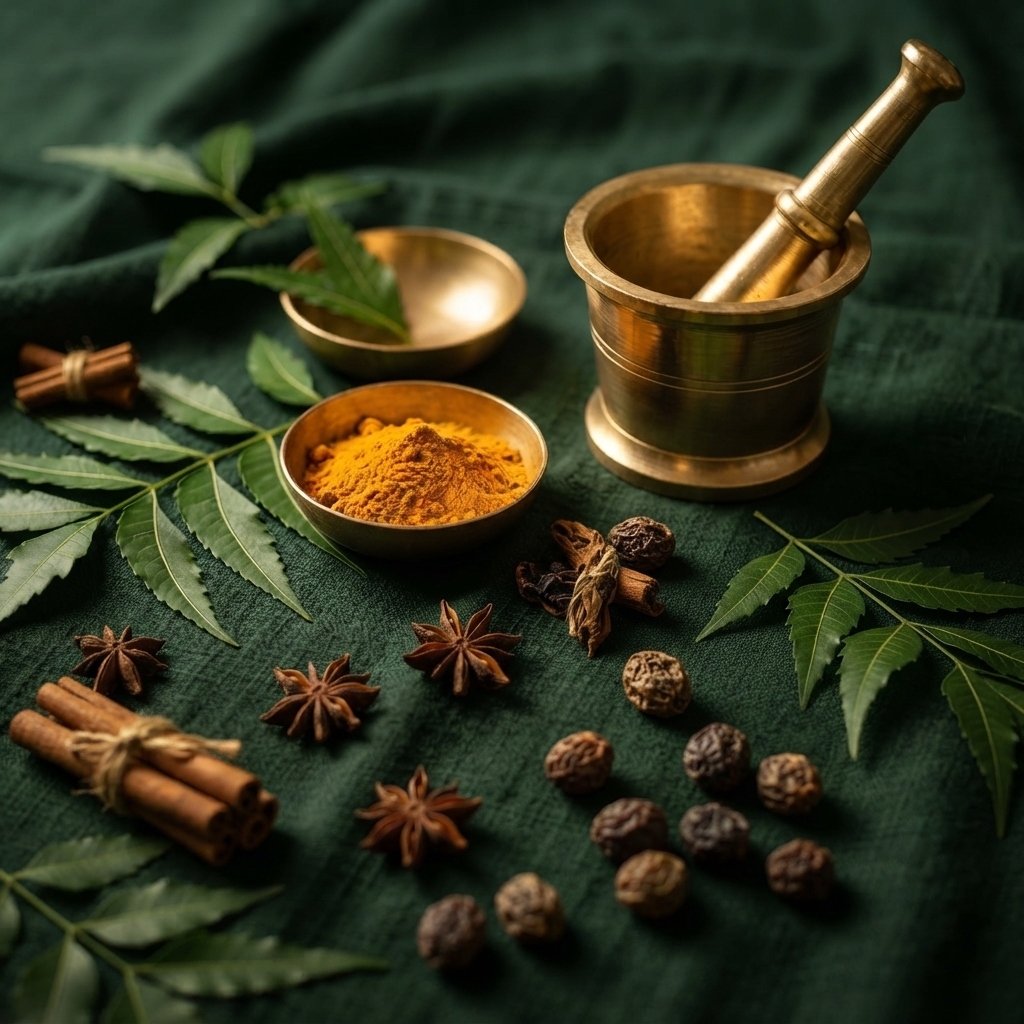
1. The Classical Pathology of Mukhadushika (Acne Vulgaris)
In classical Ayurvedic dermatology, active acne, rosacea, and inflammatory pustules are categorized as Mukhadushika (literally 'that which destroys the beauty of the face'). Described comprehensively in Charaka Samhita Nidana Sthana, this condition is classified under Kshudra Roga (minor skin afflictions that nevertheless stem from deep internal systemic vitiation).
The root pathogenesis initiates when Pitta Dosha—the biological energy governing heat, metabolic transformations, and enzymatic reactions—becomes pathologically heated. When Pitta combines with Vata (governing circulation and dryness) and Kapha (governing sebum and structural lipids), it attacks the Rakta Dhatu (blood plasma and circulatory tissue). The resulting heated blood causes localized swelling, comedones, inflamed papules, and cystic nodules.
2. Why Topical Suppression Triggers Chronic Rebound Breakouts
Modern conventional dermatological approaches frequently rely upon chemical stripping agents (high-percentage salicylic acid, benzoyl peroxide) and synthetic topical corticosteroids or oral antibiotics. While these treatments may temporarily suppress surface microbes, they dehydrate the cutaneous acid mantle and drive the underlying heat deeper into the visceral tissues.
Ayurvedic medicine views cutaneous flare-ups not as isolated surface infections, but as an emergency venting mechanism: the body attempting to expel excess metabolic heat (Usna) and sticky endotoxins (Ama). Suppressing this outward release without detoxifying the blood guarantees chronic recurrence, cystic hardening, and post-inflammatory hyperpigmentation.
3. The 3-Pillar Ayurvedic Clinical Protocol
At Dr. Prerna Ayurveda Clinic, our clinical management of Pitta-induced acne is grounded in three immutable therapeutic pillars:
Rakta Shodhana
Blood purification using bitter (Tikta) and astringent (Kashaya) herbs that bind to free radicals and cool circulatory heat.
Agni Deepana
Normalizing digestive fire so food is completely metabolized into pure nutrient plasma (Ahara Rasa) rather than toxic Ama.
Twachya Lepanam
Topical herbal pastes formulated with Lodhra, Chandana, and Sariva to extinguish dermal heat without disrupting natural lipids.
4. Prescribed Pharmacopoeia: Key Botanical Allies
- Manjistha (Rubia cordifolia): The premier Ayurvedic blood detoxifier. Inhibits tyrosinase, neutralizes inflammatory cytokines, and eliminates deep post-acne dark spots.
- Sariva (Hemidesmus indicus): Also known as Indian Sarsaparilla, it possesses potent Sheeta (cooling) virya that calms burning cutaneous sensations and balances female hormonal fluctuations.
- Lodhra (Symplocos racemosa): Renowned for its Grahi (absorbing) and Shothahara (anti-inflammatory) qualities, it tightens stretched follicle walls and accelerates wound healing.
- Chandan (Sandalwood): Pure heartwood extract that physically lowers cutaneous micro-vascular temperature on contact.
5. Pitta-Pacifying Dietary & Dinacharya Guidelines
Nutrition is primary medicine in Ayurveda. To permanently eradicate hormonal acne, patients must adhere to dietary thermodynamics:
Deep-fried oily foods, fermented foods (vinegar, old cheese, soy sauce), red chilies, excess garlic, tomatoes in large quantities, alcohol, and late-night dinners past 8:30 PM.
✦ Foods to Actively Introduce (Pathya):Fresh tender coconut water, overnight soaked fennel water, sweet juicy pomegranates, cucumber, coriander leaf infusions, ghee in moderation, and cooling vetiver-infused drinking water.
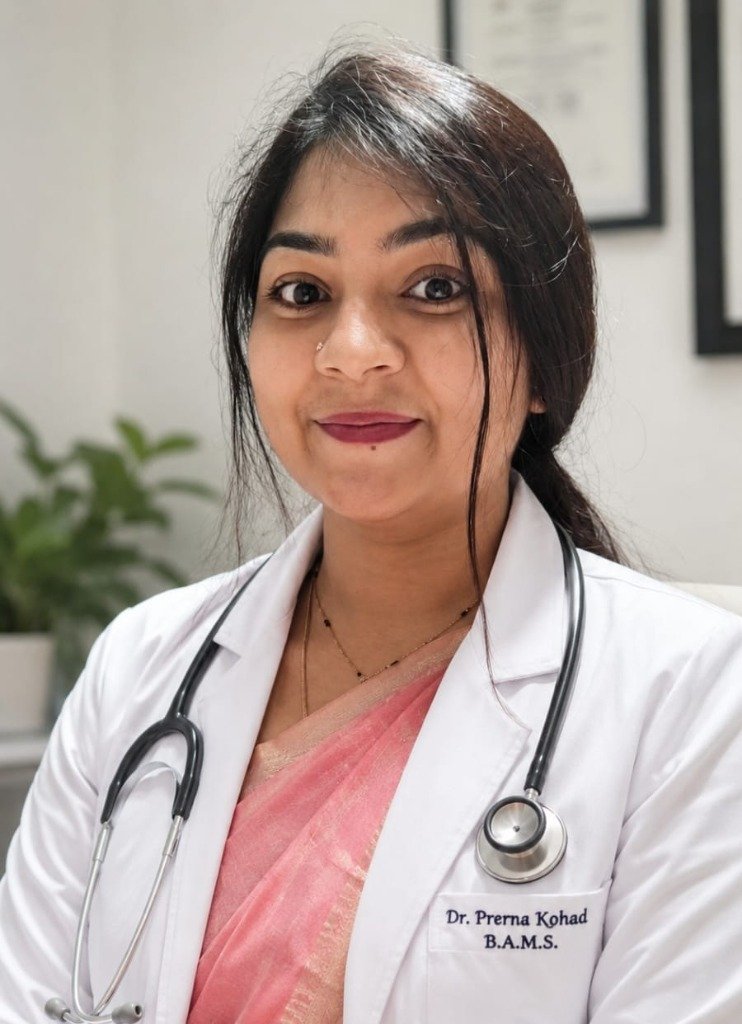
Ayurvedic Dermatology & Trichology Specialist • Nagpur Clinic OPD & Pan-India Teleconsultations